
Political Firestorm Erupts in West Bengal as ED Raids I-PAC, Triggers Legal War Between Centre and State
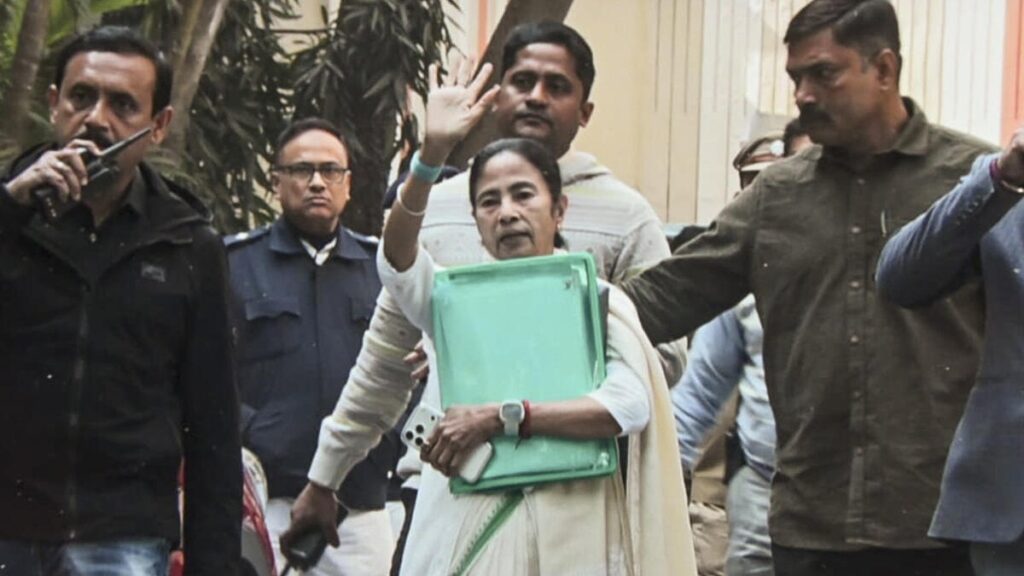
Political Firestorm Erupts in West Bengal as ED Raids I-PAC – Kolkata, January 10, 2026: West Bengal has been plunged into an unprecedented constitutional and political crisis following a series of raids by the Enforcement Directorate (ED) on the offices and residence of officials linked to I-PAC (Indian Political Action Committee), the political consultancy firm that has worked closely with the ruling Trinamool Congress (TMC). The operation has escalated into a full-blown war of words, legal maneuvers, and parallel police investigations, with Chief Minister Mamata Banerjee taking center stage to allege a brazen attempt by central agencies to “steal” her party’s sensitive organizational data. #SasaramVlogs
▎The Raid and the Immediate Allegations: The controversy began in the early hours of Thursday, January 8, when teams of the ED, accompanied by Central Reserve Police Force (CRPF) personnel, conducted simultaneous searches at six locations across Kolkata. The primary focus was the Loudon Street residence of I-PAC chief Prateek (Pratik) Jain and the company’s offices in the Godrej Waterside building, Sector V.
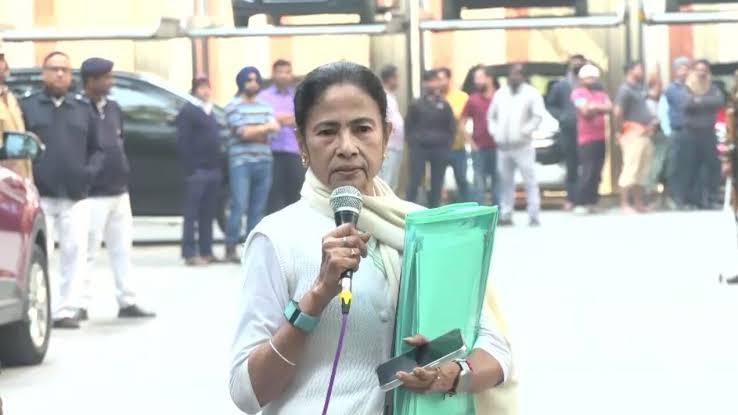
The raids were part of the ED’s ongoing investigation into an alleged coal smuggling-linked money laundering case, in which I-PAC’s financial transactions were under scrutiny. However, the situation took a dramatic turn when Chief Minister Mamata Banerjee arrived at Jain’s residence during the operation.Addressing the media in a fiery press conference, Banerjee launched a scathing attack. She alleged that ED officials were not just searching for evidence related to money laundering but were actively attempting to “seize TMC’s hard disks, internal documents, and sensitive organisational data.” She framed the action as a political vendetta and an assault on federalism, accusing the central government of using investigative agencies to destabilize a democratically elected state government.
“Their target is not corruption. Their target is our political strategies, our membership data, our internal communications. This is not an investigation; this is political espionage,” Banerjee stated.
▎Legal Onslaught: From Police FIRs to the Supreme CourtThe fallout from the raid has spiraled into a complex multi-layered legal battle, with both sides aggressively pursuing legal avenues.
1. Kolkata Police’s Counter-Investigation: In a rare move, the Kolkata Police, under the state Home Department (headed by CM Banerjee), initiated a criminal investigation against the ED officials. Multiple First Information Reports (FIRs) have been registered at the Shakespeare Sarani and Bidhannagar Electronic Complex police stations.
- Charges Filed: The FIRs invoke serious sections of the Bharatiya Nyaya Sanhita (BNS) pertaining to theft, criminal trespass, and criminal intimidation. Crucially, they also include Section 66 of the IT Act, which criminalizes unauthorized access to computers and data theft.
- The Allegation: The police complaint, based on statements from household staff and I-PAC employees, alleges that unidentified ED and CRPF personnel entered the premises without properly displaying identification or intimating local police, as per protocol. It further claims that when Kolkata Police officers, including a Deputy Commissioner, arrived at the scene, they were “obstructed” and even shown raised batons by the central forces.
- Evidence Collection: Investigators have seized CCTV footage and DVR recordings from Jain’s residence and are recording statements to identify the ED personnel involved. “Once identification is complete, notices will be issued to the accused,” a senior police officer confirmed.
2. ED’s Move to the Supreme Court: The Enforcement Directorate responded by taking the fight to the highest court. After the Calcutta High Court deferred hearings on its petition till January 14, the ED filed an urgent Article 32 petition in the Supreme Court. The petition frames the state’s actions as a grave obstruction of justice. https://sasaramvlogs.in
- ED’s Core Argument: The agency alleges that its “right to conduct a fair and independent investigation has been curtailed by the state machinery.” The petition specifically names Chief Minister Mamata Banerjee, accusing her of “aiding” the police in taking away “incriminating documents from the agency’s custody” during the raid. The ED has sought a Central Bureau of Investigation (CBI) probe against Banerjee for this alleged obstruction.
- Federalism at Core: The case is poised to become a landmark legal dispute on the limits of central agency powers in a state and the extent to which a state government can legally resist or investigate the actions of those agencies.
3. The Caveat and the Impending Showdown: Anticipating the ED’s move, the West Bengal government has filed a caveat in the Supreme Court. This legal instrument ensures that no ex-parte order (an order passed without hearing the other side) can be issued in the case. It sets the stage for a heated confrontation between the state’s and the centre’s legal teams before the apex court.
▎The Larger Political Narrative and Implications
This incident transcends a mere law enforcement action. It has become a potent symbol of the ongoing, bitter feud between the Bharatiya Janata Party (BJP)-led central government and the TMC government in West Bengal.
- TMC’s Narrative: The party is projecting this as the “death of democracy” and “cooperative federalism.” They argue that the raid on I-PAC—which manages their political strategy, data analytics, and campaign outreach—is a direct attempt to cripple the party ahead of future elections. The involvement of the Chief Minister personally lodging police complaints amplifies this narrative of a state under siege.
- BJP Centre’s Narrative: The central government and the BJP are likely to frame this as a clear case of a corrupt state government shielding guilty parties and intimidating independent agencies doing their duty. The ED’s Supreme Court petition directly alleging obstruction by the CM feeds into the BJP’s national campaign against TMC’s alleged corruption.
- The I-PAC Factor: The targeting of a private political consultancy firm raises novel questions about the reach of financial investigations into entities that work with political parties. The outcome could set a precedent for how agencies treat third-party service providers in the political arena.
▎What Happens Next? The nation’s eyes are now fixed on two dates: the Calcutta High Court hearing on January 14 and the imminent proceedings in the Supreme Court. The legal outcomes will have profound implications:
- Will the Supreme Court uphold the ED’s autonomy to investigate without state interference, or will it validate the state’s right to question the procedures of central agencies operating within its jurisdiction?
- Will the Kolkata Police’s FIRs against unknown ED officials proceed, potentially leading to arrests or summons, creating an unprecedented scenario where state police charges central investigators?
- How will this affect the political climate in West Bengal and the already strained Centre-State relations?
Our YouTube Channel 📢 : https://youtube.com/@sasaramvlogs.
The raid on I-PAC has opened a Pandora’s box, merging allegations of financial crime with charges of political espionage and obstruction of justice. It is no longer just about coal smuggling or money laundering; it is a high-stakes battle over power, federalism, and the very rules of engagement between a hostile Centre and a defiant State.
The coming weeks in courtrooms will determine not just the fate of an investigation, but potentially redefine the boundaries of India’s federal structure! ⏳
One & only our Chief Minister, Mamata Didi 😍❤️
Khela hobe ki na 😂
“I am not Left or Right. I believe in nationalism, patriotism, the federal structure, democracy, and the poor.” – Mamata Banerjee 🤍